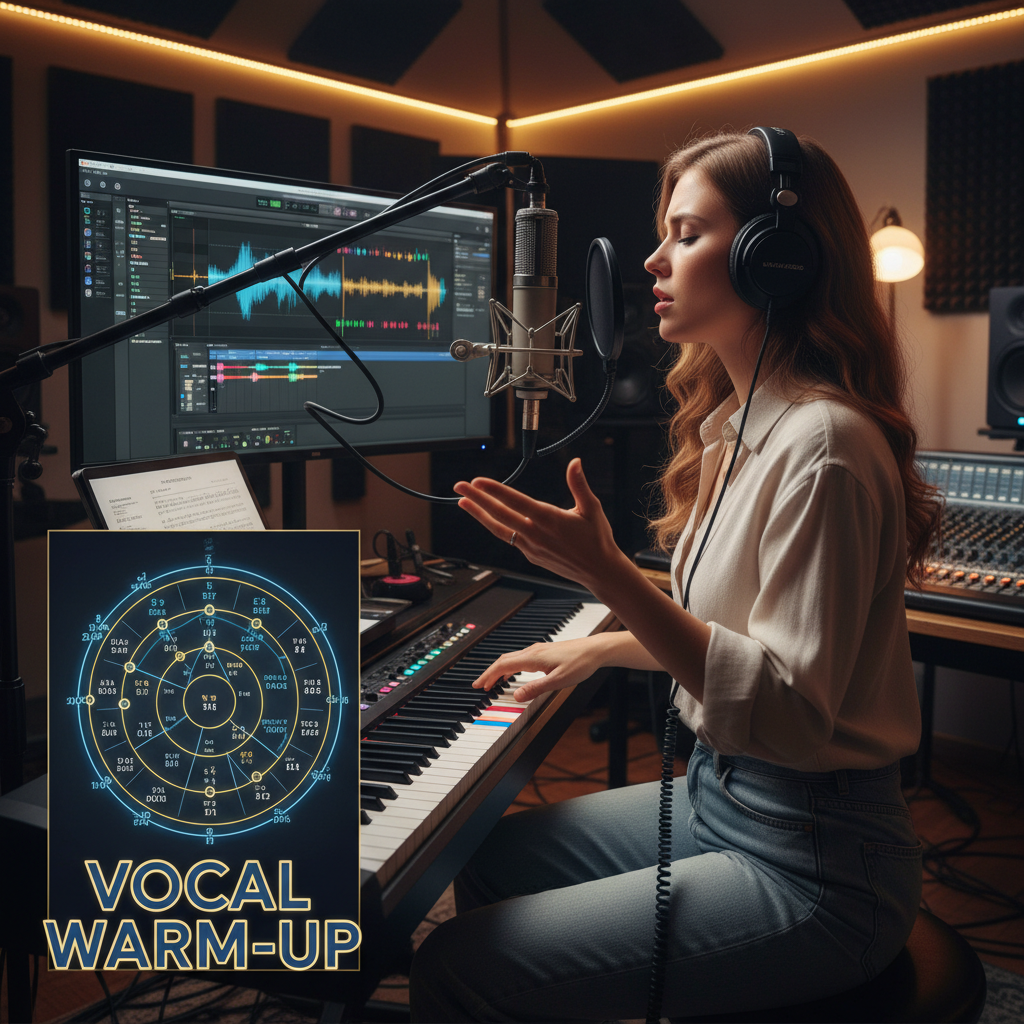
Finding Your Perfect Pitch: How to Choose the Right Beat Key for Your Voice
3 months ago
alexthrivemusicofficial@gmail.com
Choosing the right instrumental for your next project is about more than just finding a catchy melody or a hard-hitting drum loop; it is about creating a sonic environment where your unique voice can truly flourish. Many artists spend hours scrolling through various tracks, only to realize during a recording session that the arrangement is either too high for their comfort or too low for their natural power. This mismatch often leads to vocal fatigue or a performance that sounds thin and uninspired. Understanding the relationship between musical keys and your vocal range is the secret to transforming a standard demo into a professional-grade hit. Selecting the correct key allows you to project with confidence and ensures that every lyric you deliver carries the intended emotional weight.
Understanding Your Vocal Range and Tessitura
Before you decide to buy beats or commit to a specific track, it is essential to have a clear understanding of your vocal range. In the world of music production, voices are generally categorized into types such as Soprano, Alto, Tenor, and Baritone. However, the most important factor for an artist is their 'tessitura'—the range of notes where their voice sounds most resonant, comfortable, and aesthetically pleasing. While you might be able to hit a high C in a warm-up, that note might not be the best place to center your chorus. When you search for the perfect foundation for your song, you should prioritize tracks that keep your main melodies within this sweet spot to ensure your voice sounds full and controlled.
For rappers, the concept of vocal range is just as critical as it is for singers. Even though rap is often percussive and rhythmic, your speaking voice possesses a natural pitch and frequency. If you lease a beat that sits in the same frequency range as your natural voice, you might find yourself 'fighting' the beat to be heard. Conversely, choosing an instrumental in a complementary key can provide the necessary separation, allowing your flow to sit on top of the mix with clarity. Finding this balance is a key step in the process of music licensing, as it ensures the final product sounds cohesive rather than cluttered.
To find your range, you can use a simple piano app or a tuner to identify the highest and lowest notes you can sing comfortably. Once you have this data, you can more effectively evaluate the type beats you encounter online. If a beat's primary melody or bassline occupies a space that forces you into an awkward register, it is often better to keep looking for a track that feels more natural. Remember, a great performance starts with a comfortable artist. Taking the time to analyze your voice before you buy a beat will save you hours of frustration in the mixing stage.
How Musical Keys Influence Genre and Mood
Musical keys are not just technical designations; they are emotional blueprints that define the vibe of your song. Different genres often gravitate toward specific keys to achieve their signature sound. For instance, many pop type beats are written in major keys like C Major or G Major, which are associated with brightness, energy, and a radio-ready appeal. If your goal is to create an uplifting summer anthem or a high-energy dance track, choosing a beat in a major key will help you tap into that positive emotional frequency. This is why many top-charting hits feel so infectious—they are built on musical foundations that naturally evoke a sense of joy and movement.
In contrast, genres like Trap, Drill, and Rock often utilize minor keys to convey a sense of urgency, mystery, or aggression. A minor key can provide the dark, moody atmosphere necessary for a deep lyrical narrative or a hard-hitting club banger. When you look at the various beats available on Alex Thrive Beatz, you will notice how the key changes the entire character of the production. For an Afropop or Reggae track, the key might be chosen to highlight the brightness of the percussion, while a Country or Folk song might use a key that emphasizes the rich, earthy tones of an acoustic guitar. By understanding these genre-specific trends, you can make a more informed decision when you lease an instrumental.
It is also worth considering how a key change can alter the 'energy' of your performance. Sometimes, shifting a song up by just a half-step can add a sense of tension and excitement that makes a chorus pop. On the other hand, lowering the key can give a song a more intimate, soulful feel. As you explore various instrumentals, think about the story you want to tell. Does the key support that story? If you are aiming for a vulnerable R&B vibe, you might want to look at r&b type beats that utilize complex jazz chords and minor sevenths, as these musical structures provide a sophisticated backdrop for emotional vocal delivery.
Practical Tips for Testing Beats Before You Buy
One of the most effective ways to ensure a track is right for you is to test it thoroughly before making a purchase. When you browse the beat store, don't just listen to the music—try to interact with it. Use a voice memo app on your phone to record yourself humming or freestyling over the preview. This low-pressure environment allows you to hear how your voice interacts with the track's key and tempo. If you find that you are consistently reaching for notes that feel strained, or if your voice feels 'lost' in the lower frequencies of the beat, it may be a sign that the key isn't the best match for your current vocal state.
Another advanced technique is to use pitch-shifting software to experiment with the beat. Many digital audio workstations (DAWs) allow you to transpose a preview file up or down a few semitones. This can help you determine if the track would work better for you in a different key. However, keep in mind that extreme pitch-shifting can sometimes distort the quality of the drums or lead instruments. This is why it is always preferable to find a beat that fits your voice in its original state. If you find a beat you love but the key is just slightly off, you can always reach out to the producer to see if a custom version is possible, which is a common practice in professional beat licensing.
Finally, consider the arrangement of the beat. A key might feel great in the verse but become difficult in the chorus if the melody jumps an octave. Pay close attention to the lead synths and guitars; they often dictate the 'ceiling' of your vocal performance. By being proactive and testing your ideas early, you can buy an instrumental with the total confidence that it will result in a high-quality finished song. This preparation is what distinguishes amateur creators from professional artists who understand the importance of technical compatibility in music production.
The Role of Software in Key Selection
In today's digital landscape, tools like Auto-Tune and Melodyne are frequently used to polish vocal performances. While these tools are incredibly powerful, they work best when the vocal is already close to the intended pitch. If you choose a beat that is completely out of your range and rely solely on software to 'fix' it, the result can often sound unnatural or robotic. Choosing the correct key from the beginning ensures that any pitch correction you use remains subtle and transparent, preserving the natural character and emotion of your voice.
The Role of Beat Licensing in Vocal Production
When you have finally found the perfect beat in the ideal key, the next step is to ensure you have the right files for a professional mix. To do this, you should view licensing options to see which package provides the most flexibility. Most professional artists prefer licenses that include 'trackouts' or 'stems.' Stems are the individual audio files for every instrument in the beat—the kick, the snare, the melody, the bass, etc. Having these separate files is crucial because it allows your mixing engineer to carve out space for your voice within the specific frequencies of the key you've chosen.
For example, if you are working with a track that has a very prominent bassline in the key of F# Minor, your engineer can EQ the bass to ensure it doesn't clash with the lower register of your vocals. This level of customization is only possible when you move beyond a simple MP3 or WAV file. When you lease a beat with stems, you are essentially giving yourself the ability to 'mix' your voice into the beat rather than just sitting it on top of it. This results in a much more 'expensive' and radio-ready sound that is necessary for competing in today's music industry.
Furthermore, having a high-quality license provides peace of mind regarding the legalities of your release. Whether you are planning a small indie release or a major label push, proper music licensing is the foundation of a successful career. It protects your rights as an artist and ensures that the producer is fairly compensated for their work. By investing in the right license, you are not just buying a file; you are investing in a professional partnership that allows your creativity to reach its full potential without technical or legal hurdles.
Conclusion
Choosing the right key for your voice is one of the most important decisions you will make as an artist. It is the bridge between a great idea and a great recording. By taking the time to understand your vocal range, considering the emotional impact of different musical keys, and testing your instrumentals before you buy, you set yourself up for a smoother recording process and a more impactful final product. Whether you are looking for high-energy rap tracks or soulful pop melodies, the key of the beat will always be a primary factor in how your audience perceives your talent.
At Alex Thrive Beatz, we provide a diverse range of professionally crafted instrumentals designed to accommodate every type of voice and genre. We invite you to explore our library and find the tracks that make your voice truly shine. Once you find that perfect match, you can buy a beat or lease beats with the assurance that you are getting world-class production. Don't settle for a beat that is 'good enough'—find the one that is perfectly keyed to your voice and take your music to the next level today.


